
La Blachère by mountain bike - Heading East
Motte-du-Caire Hard
Hard
La Blachère by mountain bike - Heading East
Hard3h
18,5km
+620m
-620m
Loop
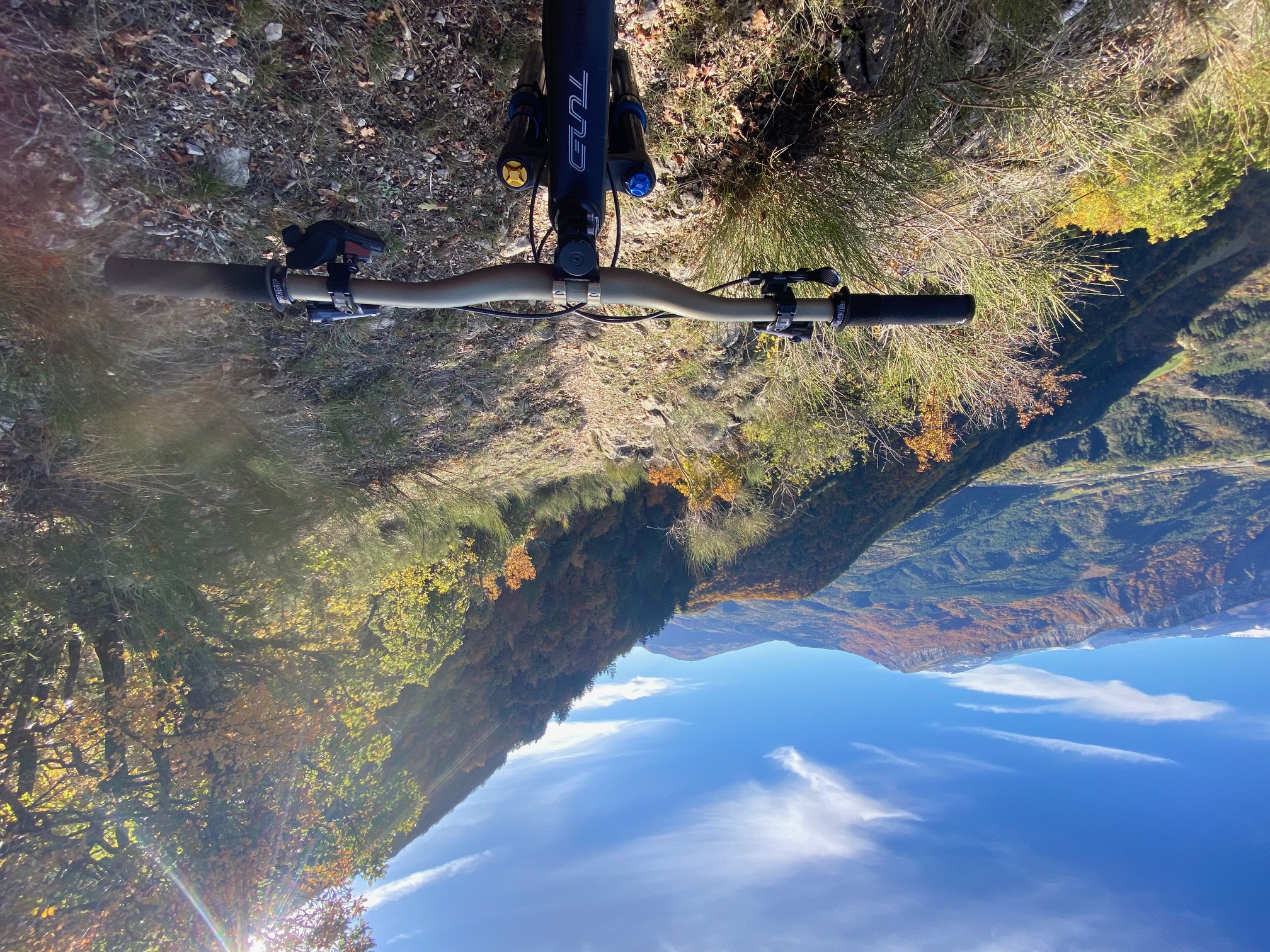
This route requires a bit of caution on the ledge trail (cattle fence). The descent trail consists of almost continuous switchbacks, some of which are very tight.
Embed this item to access it offline
Description
After a short stretch of trail heading due south along the left bank of the Grand Vallon, take the Naples forest trail for 5.5 km.
At the junction of trails 5/6/7, take the balcony trail heading due south for 1 km. Take the trail on the left and follow the series of gentle curves to Clamensane. Then take the road for 2.5 km. On the right, a trail leads you back to La Motte-du-Caire.
At the junction of trails 5/6/7, take the balcony trail heading due south for 1 km. Take the trail on the left and follow the series of gentle curves to Clamensane. Then take the road for 2.5 km. On the right, a trail leads you back to La Motte-du-Caire.
- Departure : Town Hall, La-Motte-du-Caire
- Arrival : Town Hall, La-Motte-du-Caire
- Towns crossed : Motte-du-Caire and Clamensane
Forecast
Altimetric profile
Recommandations
- A bit challenging but no portages.
- Combine with routes 5 and 6 (La Blachère: North and South routes).
- Accessibility: year-round
Transport
Let’s limit our trips and use public transportation and carpooling: https://zou.maregionsud.fr
Access and parking
From Sisteron (22 km), take the D 951 northeast to La Motte-du-Caire.
1 point of interest
Office de Tourisme La Motte du Caire  Flora
FloraThe apple
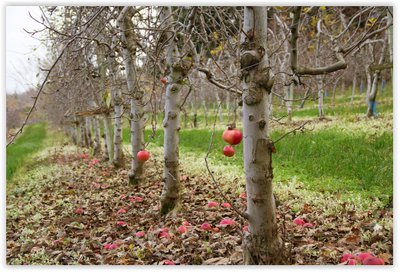
The emergence of the Rosaceae family 80 million years ago marked the birth of this large family to which the apple belongs. The apple as we know it today first appeared in the early Quaternary period in the region of Turkey, approximately 2 million years ago. Originally, apples were tiny and poisonous. During the Neolithic period, the shift to a sedentary lifestyle, along with access to agriculture and animal husbandry, facilitated their development and subsequent spread to Egypt, Greece, and Italy. In the 7th century BC, the founding of Marseille by the Greeks was undoubtedly one of the starting points for the introduction of the apple tree in southern France. The Romans brought with them the thirty or so varieties they knew. From the 10th to the 14th century, monasteries developed the importation and grafting of apples. Today, several thousand apple varieties exist; here, the Golden Delicious is the most common. As for its medicinal benefits, here are a few that will certainly encourage you to eat apples more often (tooth decay, constipation and diarrhea, fatigue, insomnia, obesity and cellulite, burns…).
Report a problem or an error
If you have found an error on this page or if you have noticed any problems during your hike, please report them to us here: