
Balade des vergers by bike
Caire Very easy
Balade des vergers by bike
Very easy3h
25,9km
+265m
-265m
Return trip
Embed this item to access it offline
Follow the mountain bike trail N°1 (VTT N°1)
Description
- From the tourist office parking lot at the base of the Grande Fistoire via ferrata, head south toward the village of Le Caire. Walk through the village along its winding alley.
- At the square (786 m), follow the D 951 for 500 m until you reach the village exit.
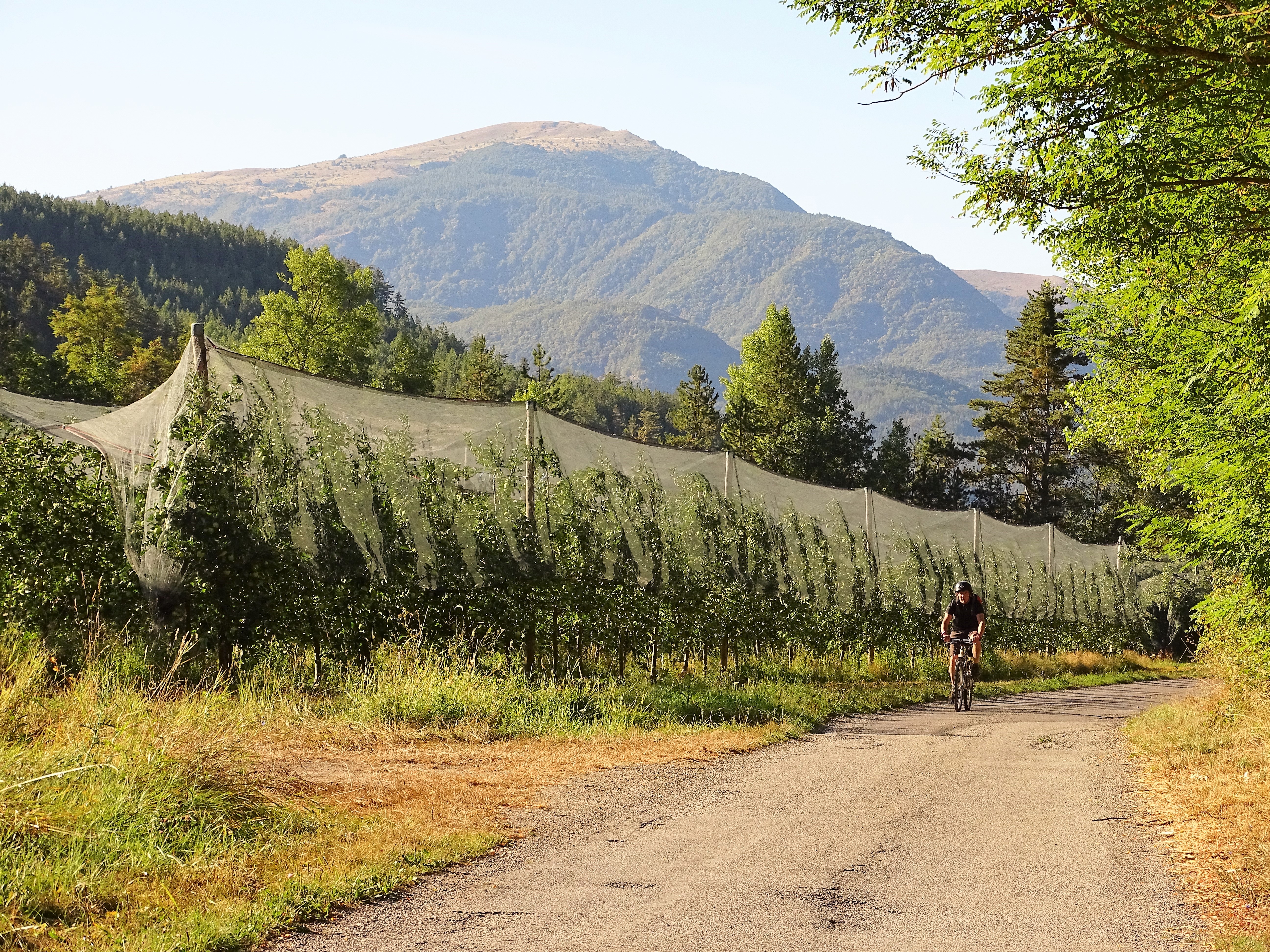
- Take the trail on the left. Cross the river several times. Follow the paved road for a short stretch, winding through the orchards to reach La Motte du Caire.
- Once at La Motte du Caire (700 m), cross the village toward Le Caire, then, after the Maison de la Santé, turn right onto the Chemin de Sainte-Anne. The small road descends to the river and crosses it via a footbridge. Turn right. Pass under the soccer field to reach the campground.
- Continue along the river. Facing the glider airfield (on the opposite bank), leave the forest trail on your left (MTB markers #5-6-7) and continue straight ahead.
- At Le Plan (660 m), pass the equestrian center on your left and continue along the trail to the intersection with the D 1.
- Follow the road toward Clamensane until you reach the village.
- Departure : 3 possible starting points: Caire Via Ferrata Office, La Motte du Caire, or Clamensane
- Arrival : Caire Via Ferrata Office, La Motte du Caire, or Clamensane
- Towns crossed : Caire, Motte-du-Caire, and Clamensane
Forecast
Altimetric profile
Recommandations
- This route can be started from 3 different points
- Bike service station (bike wash, air pump, water fountain) in Clamensane (in front of City Hall).
Information desks
Transport
Let’s limit our trips and use public transportation and carpooling: https://zou.maregionsud.fr
Access and parking
From Gap (42 km), take the D 900B south to Remollon, then the D 951 south to Le Caire.
Parking :
Via ferrata office parking lot, le Caire
1 point of interest
Office de Tourisme La Motte du Caire  Flora
FloraThe apple
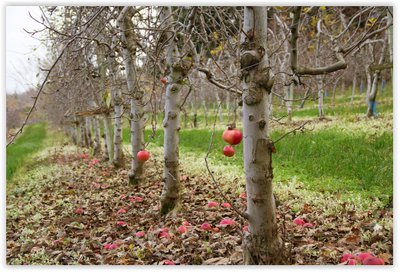
The emergence of the Rosaceae family 80 million years ago marked the birth of this large family to which the apple belongs. The apple as we know it today first appeared in the early Quaternary period in the region of Turkey, approximately 2 million years ago. Originally, apples were tiny and poisonous. During the Neolithic period, the shift to a sedentary lifestyle, along with access to agriculture and animal husbandry, facilitated their development and subsequent spread to Egypt, Greece, and Italy. In the 7th century BC, the founding of Marseille by the Greeks was undoubtedly one of the starting points for the introduction of the apple tree in southern France. The Romans brought with them the thirty or so varieties they knew. From the 10th to the 14th century, monasteries developed the importation and grafting of apples. Today, several thousand apple varieties exist; here, the Golden Delicious is the most common. As for its medicinal benefits, here are a few that will certainly encourage you to eat apples more often (tooth decay, constipation and diarrhea, fatigue, insomnia, obesity and cellulite, burns…).
Accessibility
 Family
- Emergency number :
- 114
More information


Report a problem or an error
If you have found an error on this page or if you have noticed any problems during your hike, please report them to us here: