
L'Aqueduc des Sagnières
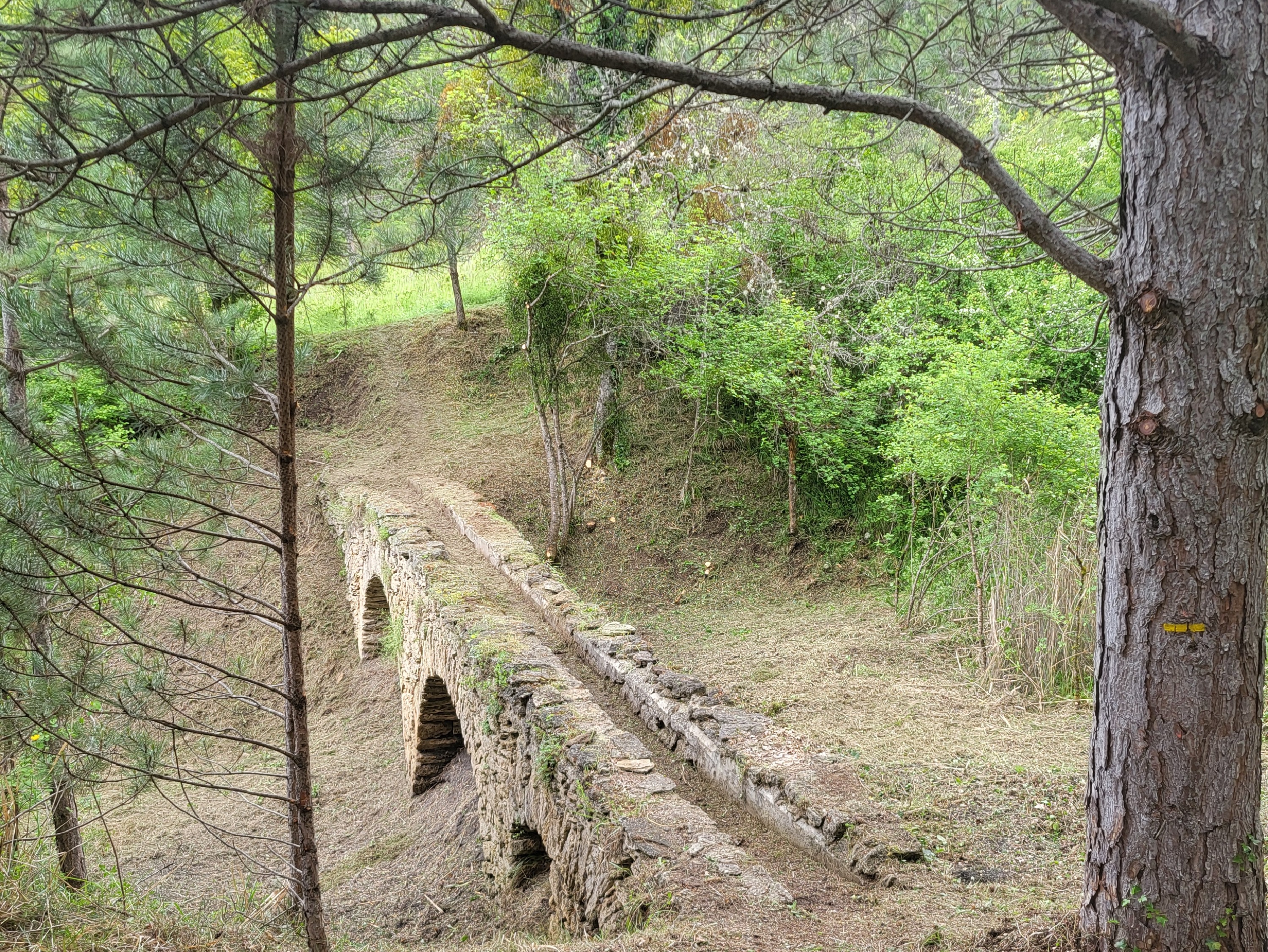
Clamensane Easy
Easy
L'Aqueduc des Sagnières
Easy3h
6,3km
+264m
-257m
Loop
Embed this item to access it offline
Description
- From the parking lot in the village of Clamensane (680 m), head toward the bridge at the village entrance and cross it.
- At the Vermeil stream (680 m), take the stairs on the right, join the trail, and follow it uphill for about 1 km.
- Leave the trail and take the path branching off to the right, then follow it up the valley to the aqueduct.
- At the Sagnières aqueduct (800 m), turn right, then left onto the path that climbs through the pine trees. At the junction with the trail, continue straight ahead along the edge of the fields. When you reach the hamlet of “Les Basses Graves,” take the road to the right.
- At Font Reynier (845 m), continue down the road, leaving the trail to the Col de la Croix on your left.
- After the bridge over the Graves stream, take the trail that descends to the right and leads through areas of robinia trees, then to the village of Clamensane.
- Departure : Town hall, Clamensane
- Arrival : Town hall, Clamensane
- Towns crossed : Clamensane
Forecast
Altimetric profile
Recommandations
This trail may pass through horse pastures. Please remember to always close the gates behind you.
Information desks
Transport
Let’s limit our trips and use public transportation and carpooling: https://zou.maregionsud.fr
Access and parking
From Sisteron (20 km), follow signs for La Baume, then take the D951 toward La-Motte-du-Caire. 3 km before reaching La-Motte-du-Caire, turn onto the D1 and continue to Clamensane.
Parking :
Parking lot at the entrance of the village, in Clamensane
1 point of interest
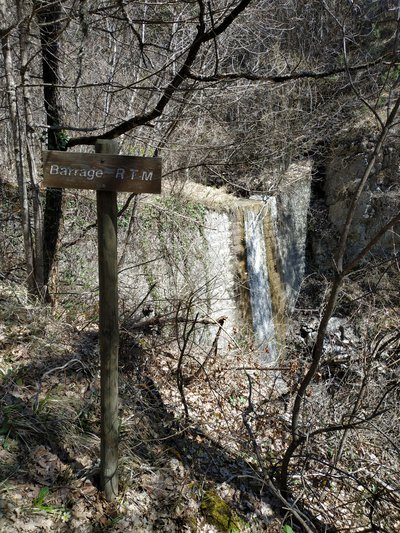
Office de Tourisme La Motte du Caire  Lake and river
The water
Indeed, through this small ravine known as the “Sagnières” (marshes, wet meadows), the river spreads its blessings throughout the first part of the trail. As Saint-Exupéry said, “What flowed thus from the belly of the mountain was life; it was the blood of men.” These men knew how to use and channel this resource, as they have done here, in order to survive. Is it not the most abundant element on the planet? With a global volume estimated at 1,360 million km³, it is also the most abundant component of living matter: humans and animals are composed of about 71% water, green plants of 85%, and wood of 50%. In other words, this water flowing at your feet remains the most precious resource the earth can offer to humankind.
More information


Report a problem or an error
If you have found an error on this page or if you have noticed any problems during your hike, please report them to us here: