
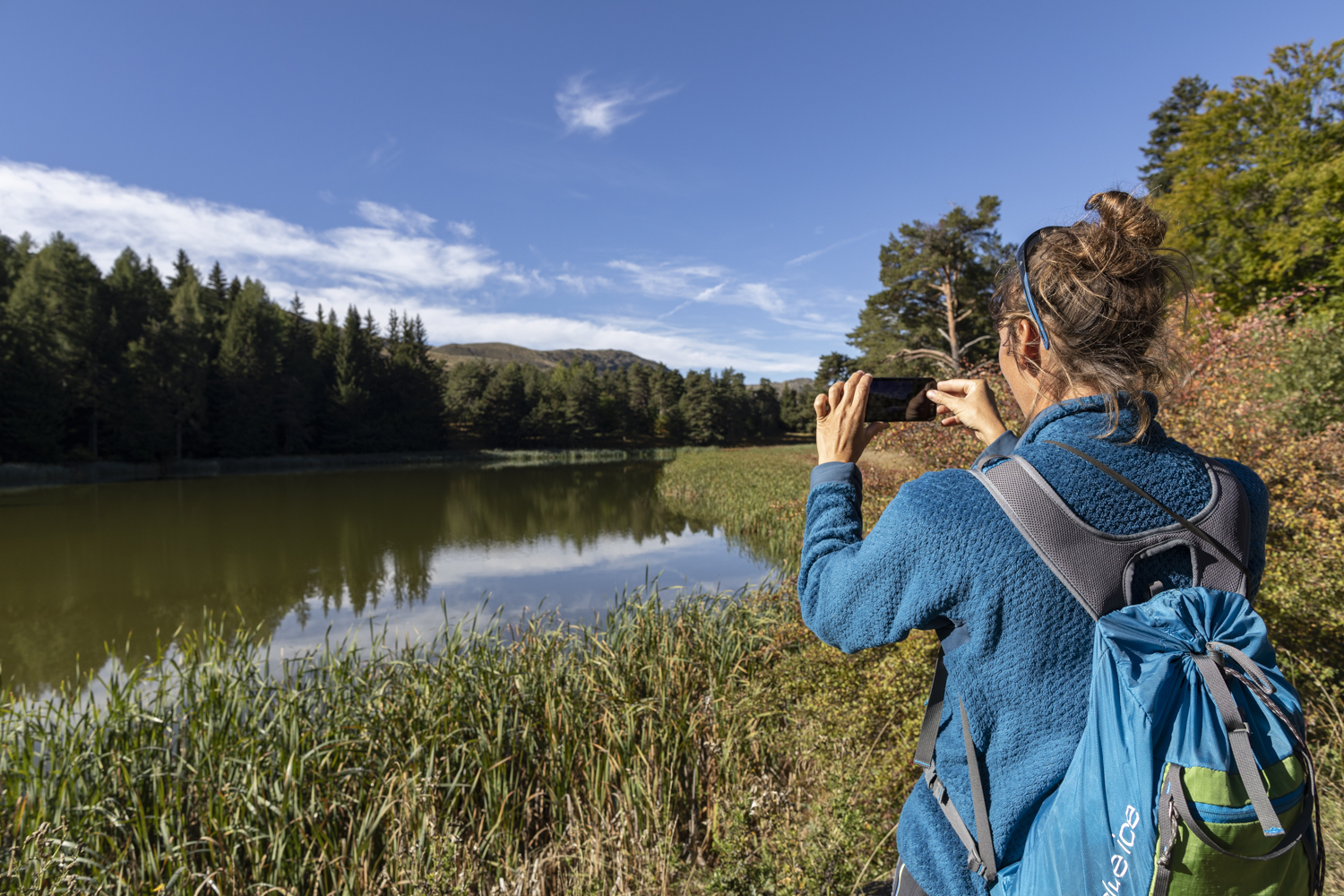
Lac des Monges
Bayons Medium
Lac des Monges
Medium5h
12,2km
+614m
-614m
Loop
Embed this item to access it offline
Description
- From the parking lot near the church in Esparron-la-Bâtie, take the trail (GR®6) that runs along the southwestern side of the church. After a 850-meter climb, leave the very rocky trail.
- At the intersection (1,317 m), follow the path to the right, which quickly leads to a pass and then to the Beaudinard Cross.
- At the Beaudinard Cross (1,340 m), continue along the trail, descending toward the hamlet of Beaudinard.
- Cross the village below the chapel and take a trail, then quickly switch to a path heading east. A series of switchbacks leads through a pine forest to a spring and, 5 minutes later, to the famous Lac des Monges.
- From Lac des Monges (1,544 m), take the trail (GR®6) to reach the new Retrouvance refuge, located slightly above the old one (500 m).
- At an elevation of 1,566 m, a new trail begins the descent to a trail junction.
- Take the left track to its end (1.2 km).
- At around 1,534 m, a trail leads back to Esparron after rejoining the ascent track.
- Departure : Church, Esparron-la-Bâtie
- Arrival : Church, Esparron-la-Bâtie
- Towns crossed : Bayons
Forecast
Altimetric profile
Recommandations
The new Retrouvance shelter is located just above the old shelter, along the GR®6 trail.
Information desks
Transport
Let’s limit our trips and use public transportation and carpooling: https://zou.maregionsud.fr
Access and parking
From Sisteron (32 km), take the D 951, then the D 1 toward Clamensane. Continue on to Esparron-la-Bâtie.
Parking :
Village center, Esparron-la-Bâtie
1 point of interest
Office de Tourisme La Motte du Caire 
The transhumance
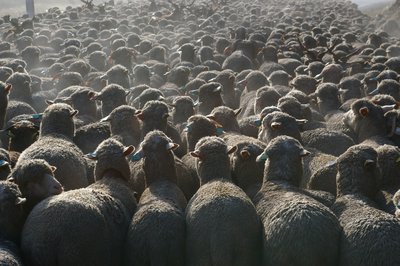
In the past, from Provence to the Southern Alps, vast herds would make their way to the Alps as summer approached. These transhumances (from the Greek “trans,” meaning “across,” and “humus,” meaning “soil”) took place along mountain trails or paths reserved primarily for the movement of herds. These routes played a vital role in attracting people, fostering strong local economies, as well as shaping culture, architecture, biological diversity, and the environmental value of the region. On this trail, you find yourself in the heart of one of these transhumance routes (after descending through the beech forest to the pastures of Clapouse). Today, most livestock is transported by livestock trucks. Nevertheless, come fall, the bleating of sheep and the ringing of cowbells still echo across these highlands of Provence.
More information


Report a problem or an error
If you have found an error on this page or if you have noticed any problems during your hike, please report them to us here: