
La Tête de La Plane
Gigors Hard
Hard
La Tête de La Plane
Hard5h
7,4km
+637m
-644m
Loop
Embed this item to access it offline
Description
- From the church in Gigors (870 m), follow the D951 to the right for 700 m until you reach a trailhead on the left.
- At the Les Aires fork (905 m), follow the trail to the first hairpin bend. A few meters past the gate, turn right to begin the climb through the woods until you rejoin the trail.
- At Gaudissart (1,120 m), at the exit of the hairpin bend, take the trail on the right that continues its ascent through the woods.
- Once you reach Source du Jas (1,301 m), pass the shelter and take the small forest path to the right. Climb to reach the end of the trail, which turns into a footpath 300 m further on and ascends to the highest point of the hike.
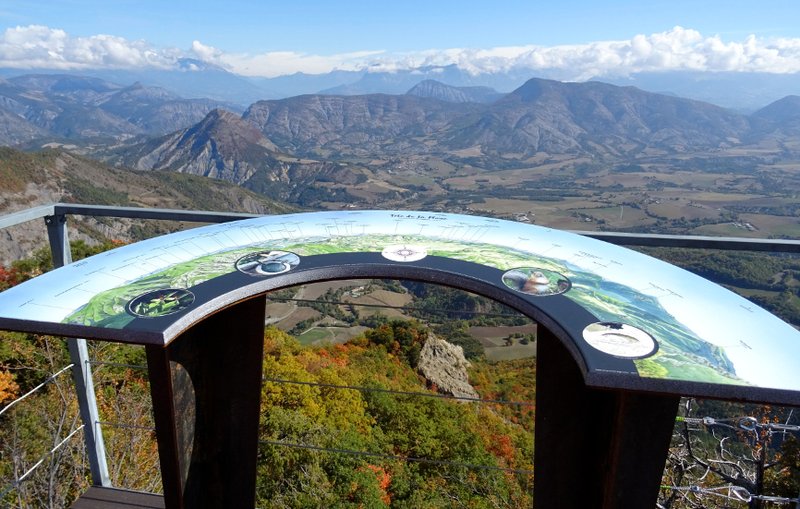
- At the Plane junction (1,410 m), head toward the summit to see the orientation table. Return to the junction and follow the path on the right to “La Dent de Gigors.” Once there, turn right and continue for about 200 m.
- At Ubac de Gigors (1,270 m), you have two options: either continue through Le Bosquet to return to Gigors via a lovely trail through the woods, or turn left and take the Ubac forest track to return to point 2 and head back via the same route you took on the way there.
- Departure : Church, Gigors
- Arrival : Church, Gigors
- Towns crossed : Gigors and Turriers
Forecast
Altimetric profile
Recommandations
The trail passes near the Source du Jas forest hut (for more information, contact the Gigors town hall).
Information desks
Transport
Let’s limit our trips and use public transportation and carpooling: https://zou.maregionsud.fr
Access and parking
From Gap (31 km), follow the D 900B south. After Remollon, take the D 951 to Gigors.
Parking :
Parking lot, Gigors
1 point of interest
Office de Tourisme La Motte du Caire  Flora
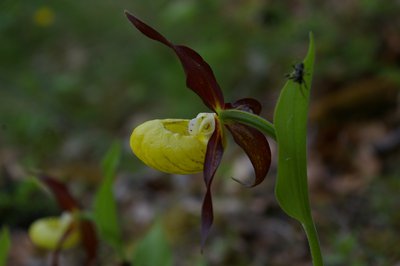
FloraVénus's slipper
A vast family that, according to some authors, comprises more than 25,000 species. Throughout their evolution, orchids have adapted to the presence of insects to ensure pollination, using shape, color, pattern, scent, and other traps. Some, such as the Lady’s Slipper, trap visiting insects that fall into the slipper, forcing them to exit via a path that brings them into contact with the flower’s reproductive parts. Later, once the seeds have formed, they are released by the thousands. These seeds can only germinate thanks to a microscopic fungus they find in the soil, which provides them with an external source of nutrients until the plant can sustain itself. This magnificent flower has three often-colored sepals (see photo) and three petals. Two of the petals are more or less atrophied, while the third, on the contrary, is highly developed and forms the labellum (or slipper). All of them are meant to be picked…only with your eyes!
More information


Report a problem or an error
If you have found an error on this page or if you have noticed any problems during your hike, please report them to us here: